Values are an indispensable part of corporate life that we are used to seeing on the walls of every organization today. How much do values, which should serve as a compass for our decisions, reflect on the way we do business and our relationships? Why is it that the function of values, which we attach great importance to when we talk about them, cannot go beyond being the decor that adorns the walls of the organization?
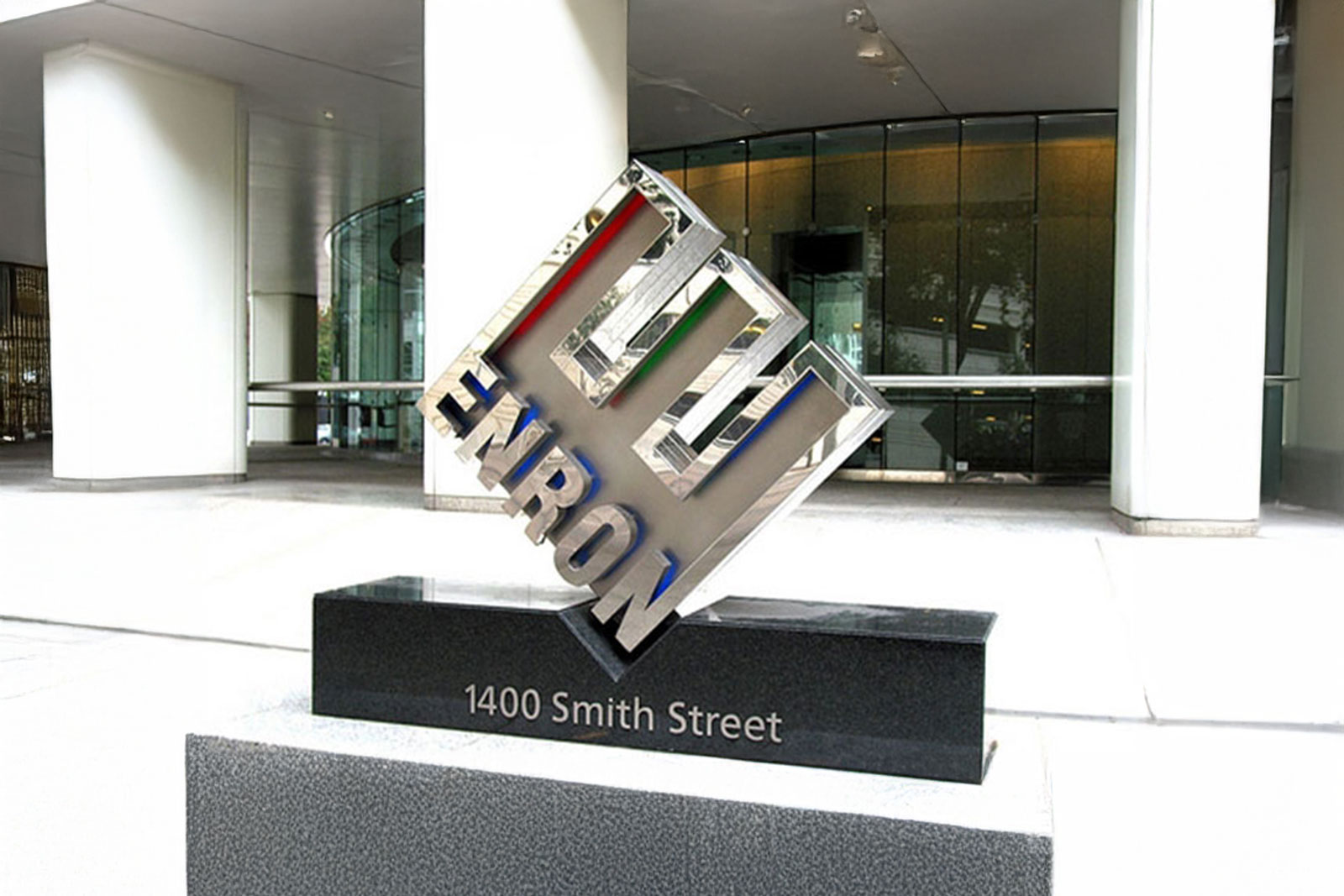
Imagine walking into a company and seeing these four values on the wall: “Respect, integrity, excellence and communication” What kind of company do you think you are stepping into?
In 1994, when J. Collins and J. Porras, in their book “Built to Last”, drew attention to the fact that “values” are decisive for company success, companies started to choose values from the “values menu”. The most popular ones are “quality, teamwork, customer orientation, assertiveness, trust, responsibility, respect” and recently “innovation” has been added. At the entrance of many companies, values have taken their place decorated with eye-catching graphics. The other day at a meeting I held at a company, when I asked them “what are the six values they pass by every day”, no one out of 150 people wrote down the six values.
Values impose a price. At the individual level, values interfere with human pleasure and self-interest. In corporate life, values negatively affect profitability, increase costs and create competitive disadvantages in the short term. For this reason, they make it difficult to do business quickly, cheaply and easily, and for this reason, they are written down, but not much attention is paid to them. Therefore, we cannot claim to have a value for which we have not paid the price, or at least are not willing to pay that price. As one ancient thinker put it, “none of us is innocent of the sin for which we have not been tested”.
There are three basic criteria for taking values from decorative to real:
1. Consistency: The values in the introduction to this article were Enron’s corporate values. If it had been possible to achieve ways of doing business that were linked to ethics and values, Enron would not have been plunged into the biggest disaster the business world has ever witnessed.
The hypocrisy and contradictions that arise when values are not filled in make the organization look ridiculous. To understand what people do, we look at their “behaviors”; to understand why they do what they do, we look at their “values”. However, I am sorry to see that many times neither individuals nor managers of organizations are aware of what their values really mean.
The fact that values form a meaningful whole and become social norms is explained by the concepts of morality and ethics. Morality is individual, ethics is institutional. While morality guides one’s behavior, ethics ensures consistency between what is said in the boardroom, what is said to employees and what is told to the outside world.
2. Link it to decisions: Our values are behind many of the decisions we make every day. We only recognize our values when we are making important decisions. Too often, we go for the easy or profitable solution, justifying to ourselves the situation that conflicts with our values with a “but”.
The same is true for organizations. For values to be realized, every decision needs to be linked to values. How will a decision be made about an employee who is to be dismissed due to a performance problem? If values related to business results are predominant, the employee is dismissed; if values such as respect for people and justice are prominent, the employee is given the necessary warnings and support such as coaching and mentoring before being dismissed.
Values and ethical principles guide individuals in business life and regulate internal and external relations. In social life, they aim to reduce individual-society conflict. When ethical principles are violated, there is individual benefit but organizational or social loss. Profiting by ignoring ethical principles is a weapon that backfires, as in the case of Enron.
Values change over time and culture. This applies to both people and organizations. But there are also values that are time and culture resistant. Many company managers and HR professionals are confused about the difference between core values and aspirational values.
In a company we worked for years ago, “urgency consciousness” was one of the top corporate values. While I thought that by looking at this value, the work in the company was started and finalized quickly, I encountered the opposite situation. “Urgency” was the consciousness that the company employees had the least. However, the top management thought that if it was written as a value, employees would develop this behavior.
Core values are defined by Collins and Porras as natural and inviolable values . Values such as justice, rights and honesty are natural and inviolable values that are resistant to time and culture. These values cannot be compromised by saying “but” for short-term interests. Targeted values , on the other hand, are the values that the organization chooses as targets for its employees and the way it does business.
Managers need to link every important decision to values . Without this, the values remain where they are written. One of the most common mistakes I see is to write “teamwork” among the values and reward individual performance. In this way, managers are saying, “run with the hare and catch the hound”, but often fail to realize that this is a contradiction.
3. Simplify: Another challenge in realizing values is the large number of values. Each manager puts the values that he or she considers important on the list of values. However, there is a hierarchy of values. The one at the top controls the one at the bottom. Therefore, it is necessary to reduce and simplify values that are similar to each other. Because excellence is not what is left when there is nothing to add, but what is left when there is nothing to subtract.
Despite the changes, the core values, which are natural and inviolable, do not change. According to a consumer survey, the percentage of respondents who say “if there is no difference in quality and price, I prefer the product of a company that I believe has a responsibility towards society” has increased from 55 percent to 65 percent in three years. This finding is a tangible sign that there is a commercial return for social contribution and commitment to moral values.
Conclusion
In the 21st century, companies with high ethical standards and employees with high moral standards will add a new dimension to a market economy based on entrepreneurship and free competition. For this, it is necessary to work to raise the level of awareness of both employees and organizations. Human resources and corporate communication departments have a responsibility in this regard, along with senior management. Thus, it will be possible for organizations to have an understanding that goes beyond just making profits and increasing share values.
R. Barrett, Liberating the Corporate Soul, Butterworth- Heinemann, 1998
R. Barrett, Building a Values-Driven Organization, Butterworth- Heinemann, 2006
Prof. Dr. Acar Baltaş
Source: https://kaynakbaltas.com/genel/degerler-hayata-nasil-gecer/